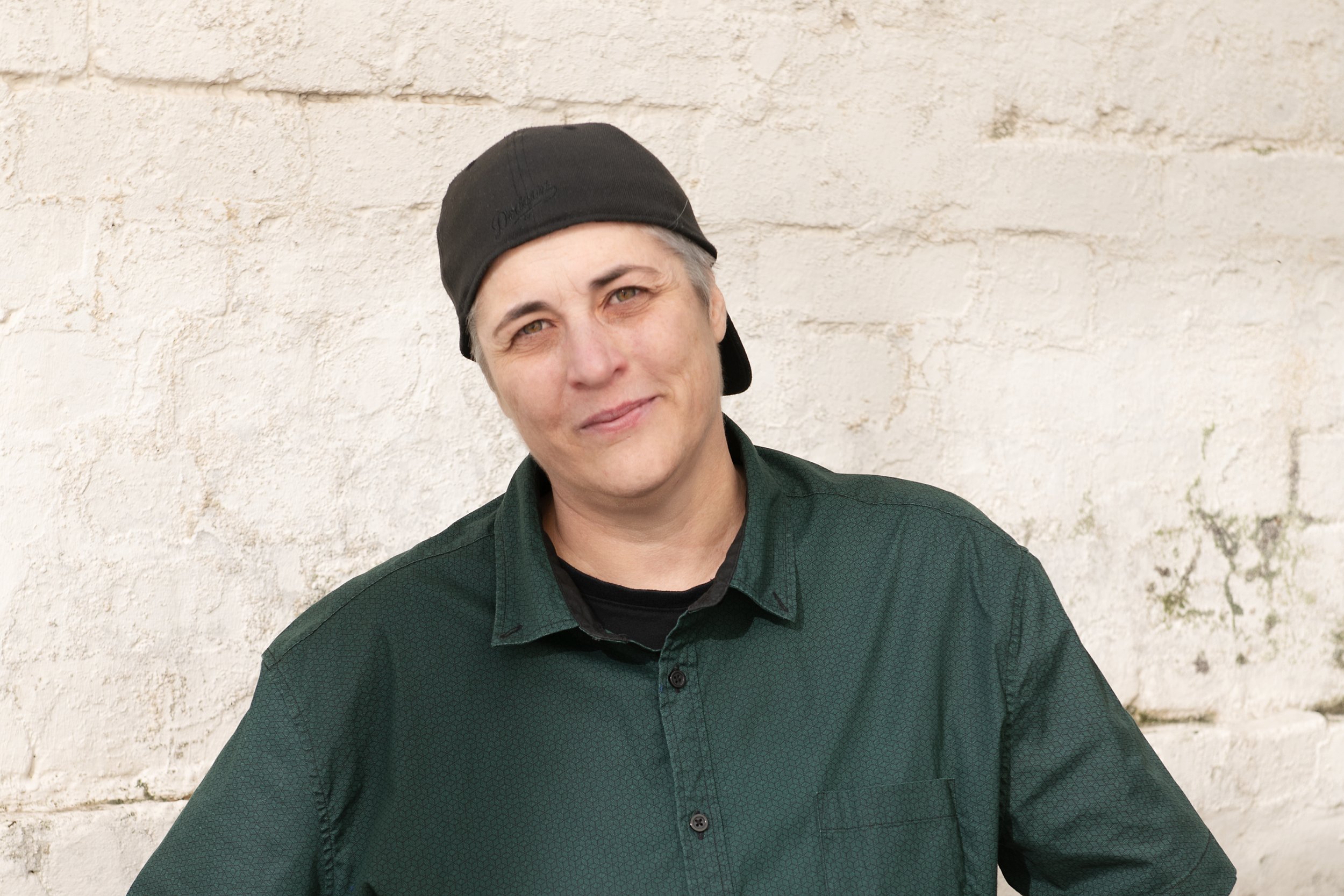

Behind the Curtain with Dr Kerryn Drysdale
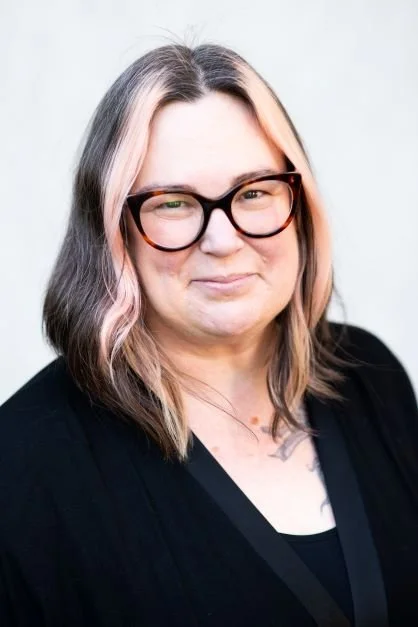
Dr Kerryn Drysdale Photograpger Nicola Bailey
History, drag kings, health, and the everyday moments in between
Welcome to Drag King Corner. Today, we’re peeking behind a different kind of curtain - the academic one - with Dr Kerryn Drysdale, researcher, writer and Senior Research Fellow at UNSW’s Centre for Social Research in Health.
Long before her work turned toward LGBTQIA+ health and wellbeing, Kerryn spent years immersed in Sydney’s drag king scene. Her research became the book Intimate Investments in Drag King Culture: The Rise and Fall of a Lesbian Social Scene - a fascinating look at the people, performances, relationships and communities that grew around Sydney’s drag king nights in the late ’90s and 2000s.
“Have you ever done drag?”
Dr Drysdale: No. Always more of an observer than a doer. Though there is much to be learnt from the position of the audience, and I have greatly enjoyed watching the performances - the creativity, the embodiment and the stylistic choices - over the decades.
The audience perspective
It seems that audience perspective shaped her interest in the scene. When she began her academic studies, did she already have drag kings in mind as a subject?
Dr Drysdale: I was first inspired to explore the relationship between performers and audience when I was undertaking a master’s degree at the University of Sydney. For a cultural studies course, I wrote a paper troubling a simple account of production versus consumption in the relationship between drag king performers and those who liked to watch them.
At the time it was tediously theoretically complicated and overwrought, and after I started my PhD on Sydney’s drag king culture, I realised there was a lot of value in documenting the varied ways that Sydney’s drag king scene mattered to people. What I was looking at, in retrospect, was a scene in the making.
Drag kings were instrumental in helping me understand how a scene comes to be, the forms of participation and belonging that structure social relations, and the ways a scene gains cultural power through the stories told about it.
Why academic research matters
That research became an important way of documenting community and belonging. Kerryn has an extensive body of published work on Sydney’s drag king and lesbian communities - so why does academic scholarship matter?
“Sydney never had a formal lesbian bar, so drag king nights created temporary spaces where lesbians could gather”
Dr Drysdale: LGBTIQA+ communities have in many ways struggled to have their histories documented, and archives maintained after the fact of their existence, as they have often been seen on the periphery of social, economic, political and cultural life. Academic research is one way these lives can be recorded.
But research is dictated by available funding, and much of the research on our communities has often taken a deficit approach - focusing on challenges rather than strengths. Yet gender- and sexuality diverse communities show us that there is a great deal of love and laughter that punctuates our lives, even amid hateful political and media rhetoric.
Complicating this aim to capture queer lives is the fact that many LGBTQIA+ events that form part of our scenes are not seen as exceptional, making it difficult to ascertain the need to document them. Sometimes paying attention to the ordinary, everyday ways that queer folks congregate can reveal extraordinary strengths of community.
What drag kings gave the lesbian community
Those everyday gatherings are often where community comes alive. For many lesbians, drag kings are more than performers - they are part of a social world. What did drag kings give the lesbian community that was hard to find elsewhere?
Dr Drysdale:
Every queer scene is different, and that is the same for drag kings. While they may adopt some universally recognised characterisations and styles, they are also a product of a particular time and place. Sydney’s drag king scene was unique, even as comparable scenes existed elsewhere.
Sydney has never really had a formal lesbian bar, and lesbian nights were often temporary arrangements — borrowing venues that otherwise catered to gay men or heterosexual patrons. Performers tirelessly negotiated with venue management and created temporary spaces where lesbians could come together for one night of the week.
It also gave people a space to experiment and play with gender — whether on stage as a drag king or in the audience.
Most memorable moments
Those spaces clearly left a strong impression. What stands out most from her decade researching the scene?
Dr Drysdale: It is really hard to identify one single memorable thing. Watching younger drag kings grow their craft and become confident performers was special. As the scene grew, performers really toyed with what a drag king could be and do, and there was so much beautiful creativity.
There is something hard to express about the way performer and audience were in sync - the atmosphere generated on those nights was amazing to be part of.
Echoes of the past - and new scenes emerging
Kerryn is no longer immersed in Sydney’s lesbian scene in the way she once was. From what she sees now, are there echoes of that drag king scene, or has community-building changed?
Dr Drysdale: There is an interesting contradiction in the idea of lesbian scenes. Scenes emerge, gain popularity, and sometimes fade away. They can never be wholly replicated in different times and places, so Sydney’s drag king scene now is likely different from the one I observed nearly 20 years ago.
Having said that, lesbians will always need spaces to build community and reflect what is important at that particular time. Drag kings function like a beacon to bring people together - even if some folks didn’t particularly like drag kings (they would just play pool instead!).
I now live in Nipaluna (Hobart), where there is a thriving drag king scene, and I see its role as likewise community‑building.
Want to hear more?
For deeper insights into Dr Drysdale’s soon‑to‑be‑published work on drag kings - and a broader conversation around queer health - listen to The Drag King Corner segment on The LOTL Lounge Podcast, where Kerryn explores these ideas further.
Long live the drag king.