

Interview with
Dr Jeff Sparrow

Dr Jeff Sparrow is a writer, editor, broadcaster and Walkley
Award–winning journalist. A senior lecturer at the Centre for Advancing Journalism at the University of Melbourne, he is a past editor of Overland and the author or editor of ten books, including No Way But This: In Search of Paul Robeson, Communism: A Love Story and the Radical Melbourne series. In 2019, he was the winner of the Pascall Prize for Arts Criticism.
Queer Australian History: Lesbia Harford, Uncovered
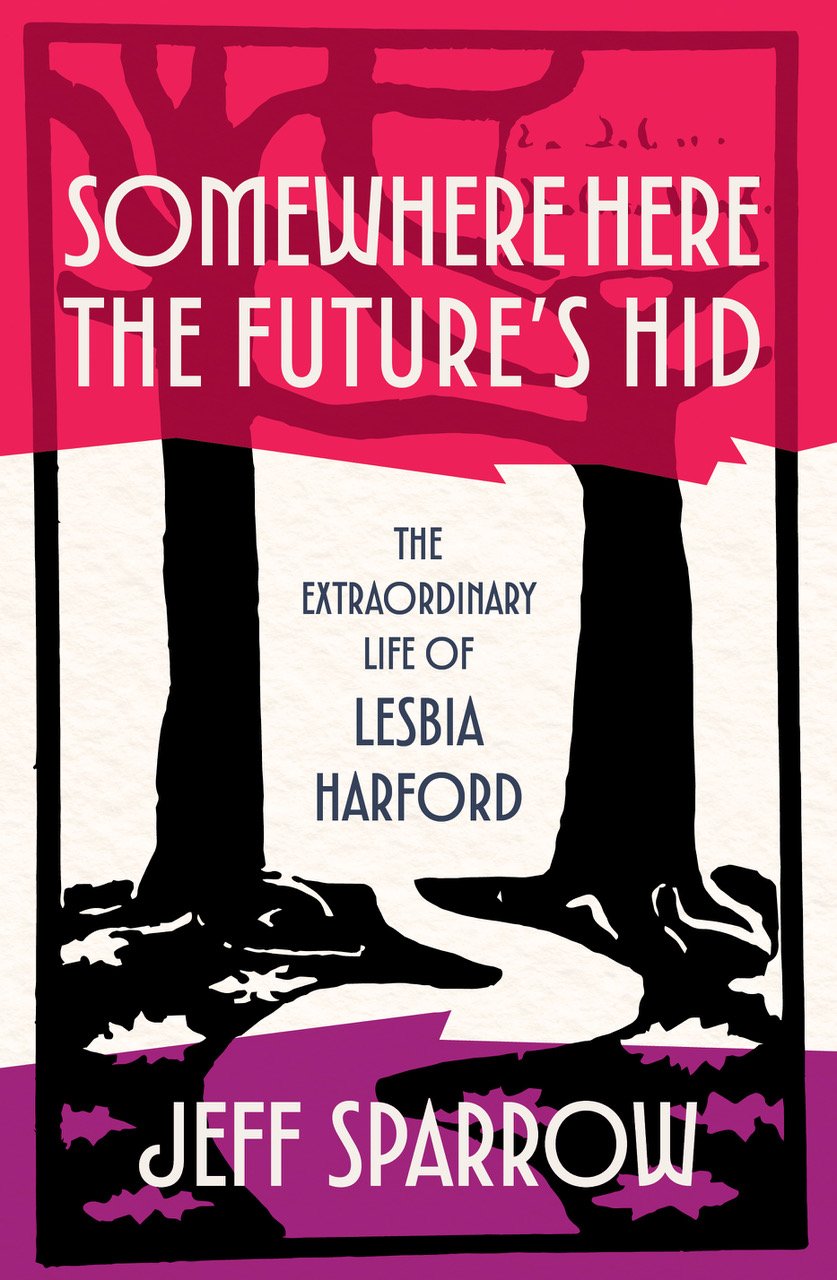
Dr Jeff Sparrow, author, academic and activist, unearths the story of modernist poet, union leader and radical spirit Lesbia Harford.
Dive into her poetry, activism, and intimate relationships that challenged the conventions of her era. Hear why her art, courage, and hidden history matter today (14:01).
Includes a beautifully moving reading from Sparrow’s biography (27:21).
Lesbia Harford: The Revolutionary Poet Australia Forgot
History is full of remarkable women whose contributions have been overshadowed by the stories of the men around them. Among them is Lesbia Harford, a poet, trade unionist, activist, law graduate, and political radical whose short life left an extraordinary legacy. Despite her achievements, she remains largely unknown outside academic and literary circles. Yet her story feels strikingly modern, touching on questions of gender, work, politics, love, and identity that continue to resonate today.
Author and historian Jeff Sparrow describes Harford as a figure who was "confronting the twentieth century as it was taking shape." More than a century later, her life and writing still challenge assumptions about Australian history and who gets remembered within it.
A Life Lived Against the Odds
Born in 1891, Lesbia Harford entered the world under difficult circumstances. She suffered from an incurable heart condition that meant she lived with constant fatigue and knew she was unlikely to enjoy a long life. Despite these challenges, she pursued an education that was almost unheard of for women of her era.
Harford became one of the early female law graduates of the University of Melbourne, studying alongside future Prime Minister Robert Menzies. At a time when universities were overwhelmingly male spaces, simply earning a law degree was a groundbreaking achievement.
Yet Harford's path would not follow the comfortable middle-class trajectory her education seemed to promise.
Disillusioned by the conservatism of the university and horrified by the First World War, she rejected the professional life that awaited her. Instead, she chose to work in a Melbourne clothing factory, immersing herself in the harsh realities facing working women. It was a decision that shocked many, particularly given her educational background and fragile health.
Activism on the Factory Floor
Harford's move into factory work was more than an act of solidarity. It became the foundation of her political activism.
Working long hours in exhausting conditions alongside factory girls, she quickly became involved in the trade union movement. She eventually rose to become vice president of the Clothing Trades Union, making her one of Australia's earliest female union leaders.
Her activism was practical, strategic, and deeply focused on women's experiences. She pushed for women to chair union meetings, encouraged female speakers and organisers, and worked to ensure that women workers had a meaningful voice within a labour movement often dominated by men.
One particularly revealing example involved a union education program. When Harford asked women workers who they wanted to hear speak, they requested a lecture from a specialist in sexual health and sexually transmitted infections. For many of these young women, such information was essential. Harford recognised this immediately, understanding that workers' lives extended beyond wages and workplace conditions.
In doing so, she demonstrated a distinctly feminist approach to organising, decades before many of those ideas entered mainstream political discourse.
Poetry from Everyday Life
While Harford was becoming an activist, she was also quietly producing some of the most original poetry of her generation.
Unlike many political poets of the era, her work avoided slogans and grand declarations. Instead, she focused on ordinary experiences. She wrote about factory work, friendships, love, illness, menstruation, and daily struggles.
Remarkably, she wrote poems about menstruation at a time when such subjects were rarely discussed publicly, let alone treated as worthy literary material.
Her poetry feels fresh because it centres experiences often omitted from historical records. Through simple observations and intimate moments, she documented women's lives with honesty and empathy.
This ability to blend the political with the personal is one reason her work feels surprisingly contemporary. She understood that politics was not only about governments and wars. It was also about relationships, workplaces, bodies, and everyday acts of resistance.
Love Beyond Simple Labels
One of the most fascinating aspects of Harford's life is her exploration of love and desire.
Modern readers are often tempted to apply contemporary labels to historical figures, but Harford's experiences remind us that relationships in the early twentieth century existed within a different cultural framework.
Much of her most powerful poetry was inspired by Katie Lush, a philosophy tutor at the University of Melbourne. Harford's poems reveal an intense emotional and romantic attachment. In one celebrated verse, she openly longs for physical intimacy and invokes the ancient Greek poet Sappho, writing:
"Would that I were Sappho, Greece my land, not this. There the noblest women when they loved would kiss."
The poem is remarkable not only for its honesty but also for its confidence. Rather than expressing shame, Harford argues for the legitimacy of female love and desire by linking her feelings to classical traditions.
At the same time, she also wrote passionate poems about men, including a young soldier named Leslie Connor, whom she barely knew before he was killed at Gallipoli.
What emerges is not a simple story about sexuality, but a portrait of a woman deeply engaged with questions of love, intimacy, and human connection. Her writings challenge modern readers to think beyond rigid categories and appreciate the complexity of emotional life in the past.
A Different Story of World War I
Harford's life also offers an alternative perspective on a period often dominated by military narratives.
Australian memory of World War I typically focuses on Gallipoli, the Anzacs, and battlefield heroism. Harford's story reveals another Australia: one divided by fierce political battles over conscription, workers' rights, free speech, and social justice.
She was involved in campaigns opposing wartime repression and supported efforts to defend academics targeted because of their German backgrounds. She later joined revolutionary political circles and became involved with some of the country's earliest socialist and communist activists.
Through her experiences, we see a nation wrestling with profound questions about democracy, freedom, and social change. These debates were just as significant as the military events that tend to dominate historical accounts.
Why Lesbia Harford Matters Today
Lesbia Harford died in 1927 at just 36 years old. Most of her poetry remained unpublished during her lifetime, preserved only in handwritten notebooks now held in library archives. Her novel was never published and was ultimately lost.
And yet her voice survives.
She matters today because she embodied an extraordinary combination of qualities. She was intellectually brilliant but rejected privilege. She was politically committed but deeply artistic. She was passionate about social justice while remaining intensely interested in personal relationships and emotional life.
Most importantly, she refused to separate these things.
For Harford, politics, art, work, and love were all connected. The society we build shapes the lives we lead and the stories we tell. That idea feels as relevant now as it did during the turbulence of the First World War.
In recovering Lesbia Harford's story, we do more than celebrate a forgotten poet. We restore a missing piece of Australian history and rediscover a woman whose courage, creativity, and determination continue to inspire a century later.
Featured Authors
Kris Keen

Fiona Kelly McGregor
Dr Jeff Sparrow

Zoe Terakes

Madeleine Grey