

The Woman Behind the Artist: A Q&A with Stacey Bennett
"I approached Stacey Bennett because her work represents the power of art to document, celebrate, and connect with our community. Through her Lesbians of Australia portrait project, Stacey is creating a collection of stories that go beyond labels, highlighting the individuality, resilience, and everyday experiences of queer women.
I was drawn to the way she uses paint and portraiture not just to capture someone’s appearance, but to express emotion, humanity, and the experiences that shape who we are — creating a deeper sense of recognition and belonging.
Stacey’s work felt like a really good fit for Queer Women at Work because she is using her creativity, passion, and voice to challenge narrow representations, create space for queer stories to be seen and remembered, and make a meaningful contribution to our community."
Maya Sugiharto - Photographer
Artist, storyteller, and LGBTQI+ advocate Stacey Bennett has become a powerful new voice in lesbian visibility through her portrait series Lesbians of Australia. In this candid Q&A, Stacey opens up about her journey, her identity, her creative process, and the human stories behind her 100‑portrait project. Her reflections offer a deeply personal look at the woman behind the artist - and the movement she’s helping shape.
Tell me about the woman behind the artist.
I grew up without any role models of what it meant to be a lesbian. I knew early on - around 14 - that I was a lesbian, and that absolutely petrified me because the term “lesbian” was used to bully people, not to embrace sexual orientation.
When I realised my sexual identity, I really came into myself. I became creative, and I let my hair down - literally and figuratively.

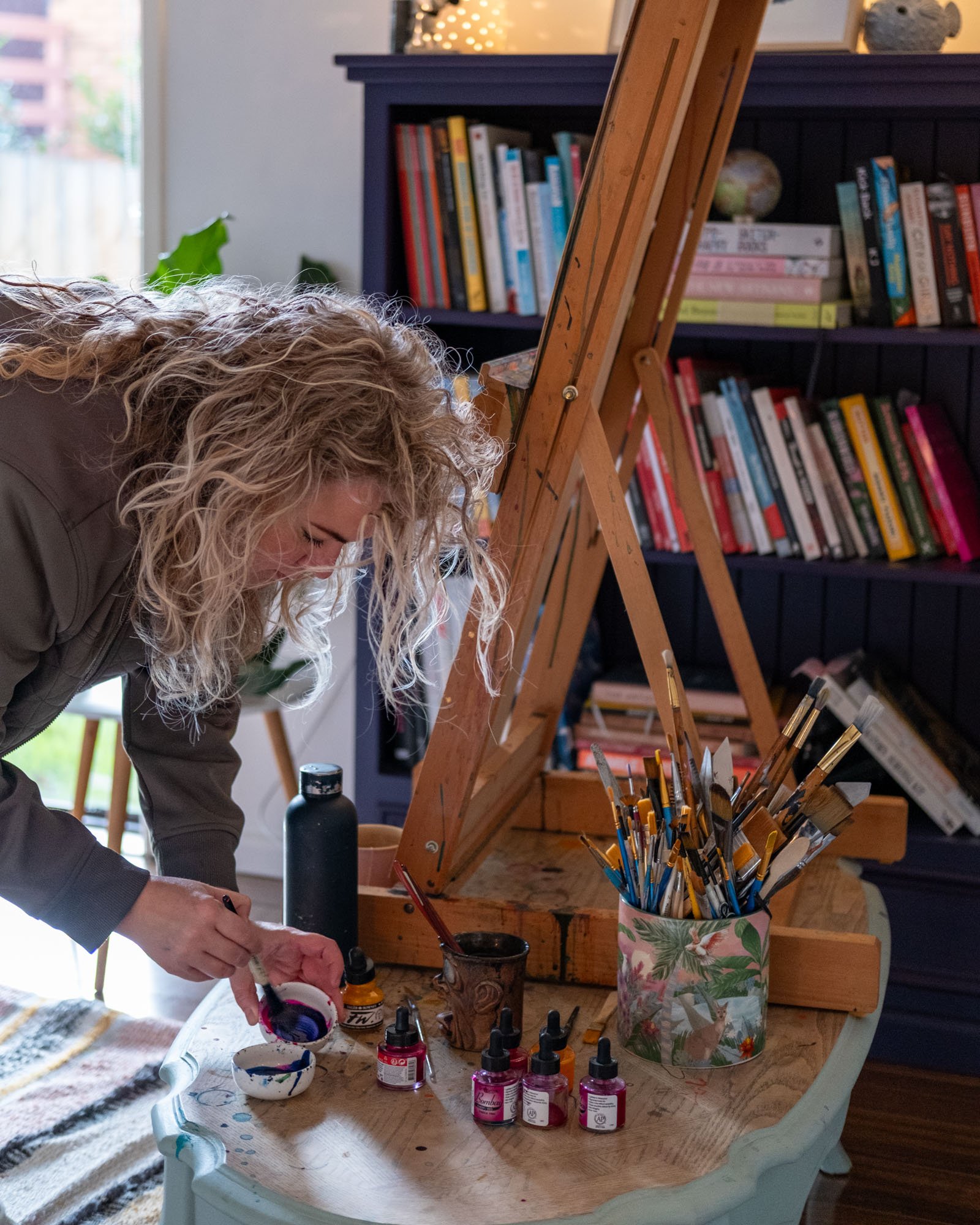
Stace at work
I used to scrape my hair back because it was so wild and uncontrolled, with curls. Then, when I realised who I was, I embraced every part of myself.
Photography: Maya Sugiharto
My sexual orientation is an important part of who I am because of the journey I’ve been on to discover myself and then to live fully and authentically from that moment.
Who am I as a woman, the woman behind the artist? I am so many things. I’m a mum to two children. I’m a wife. I’m busy with life, as everyone is. I love a good sense of humour, I love being creative, and I love connecting with people.
Who is the artist?
I feel like the artist is me - the same answer as the woman behind the artist. That’s the journey I’ve been on over the last two years within this body of work: realising that there is no right or wrong. Mistakes are okay. If I make a mistake, I either start over or celebrate it. That’s how I got through painting 100 portraits.
Now, as I show up and tell everyone I’ve painted 100 portraits, the same thing applies. There is no right or wrong. I can stand by my creative decisions and the choices I’ve made throughout the project. It’s authentic to me, and I’m comfortable with it. I will be seen and interpreted however the public sees me, and I feel comfortable with that. I would say that hasn’t always been the case.
So, the artist now is basically an extension of you?
Yes. It has to be, because I’m connecting with these people by being myself, making them feel comfortable, and asking them to trust me with their story. The artist connecting with them is not a different person - it’s me.

Photography by Maya Sugiharto
Tell me about your work and why you chose your subjects.
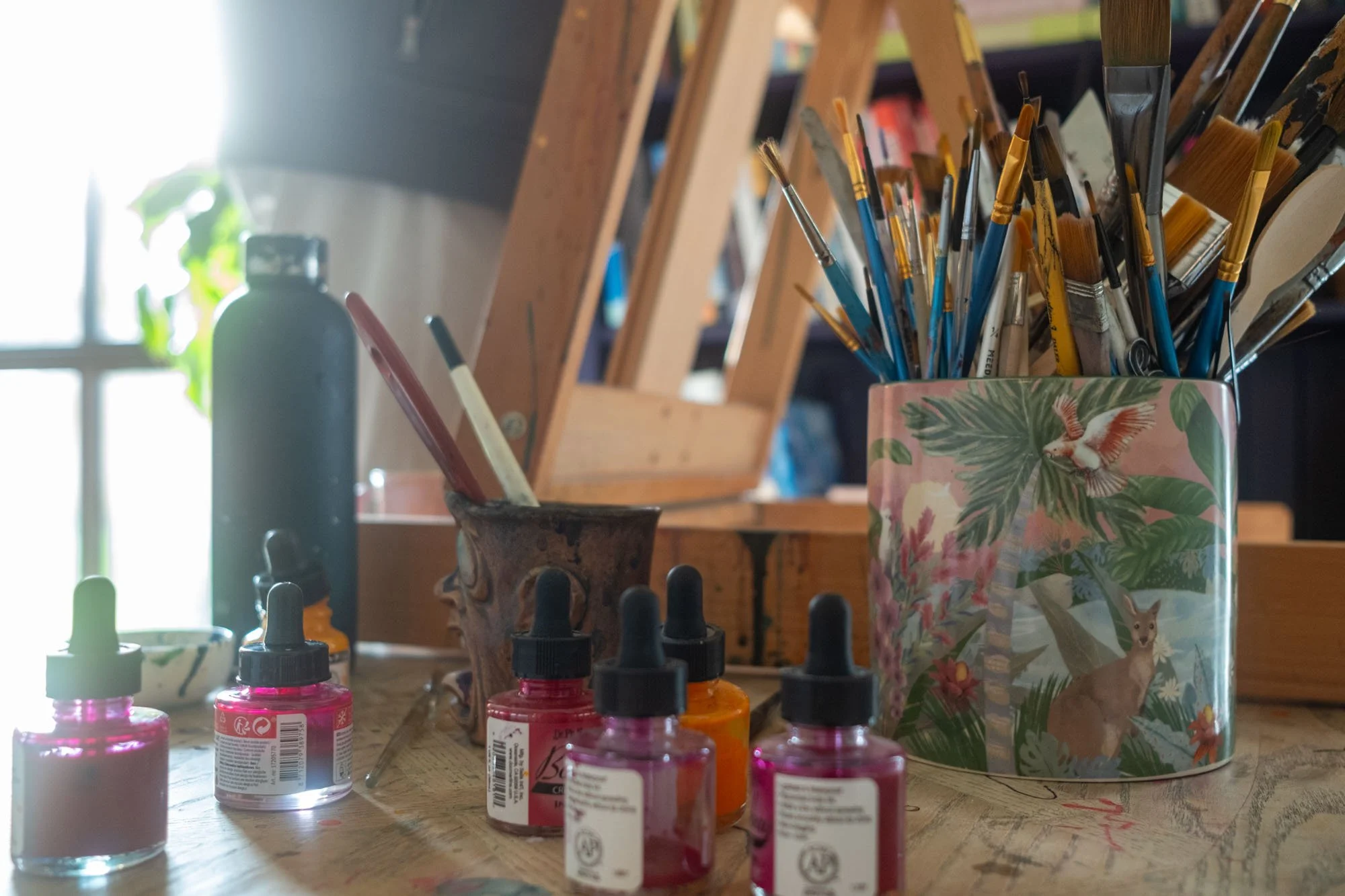
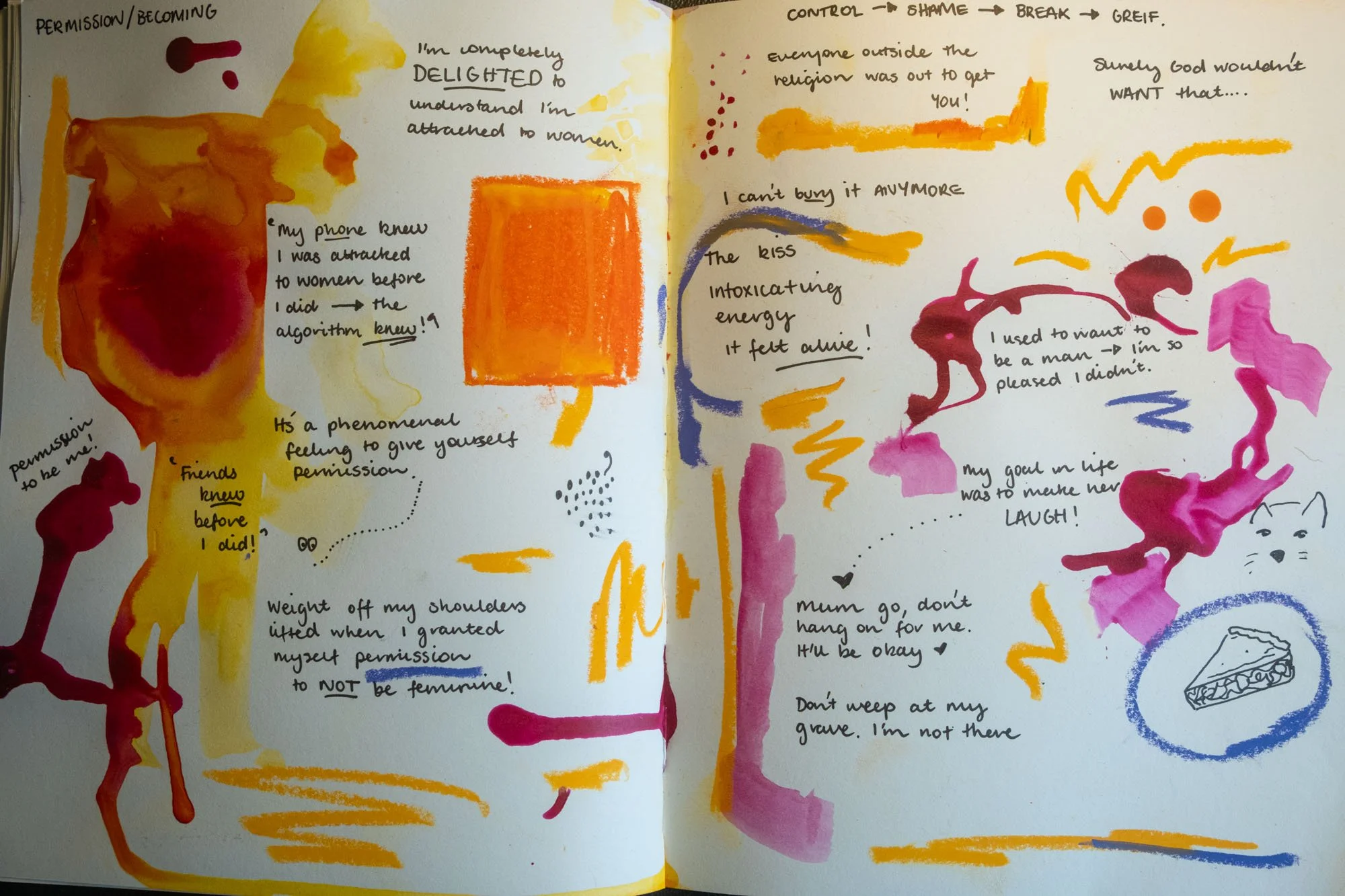
I’ve deliberately chosen to work with bright, messy media like dripping ink because it feels like an extension of me. I’m messy and creative, and I don’t want things to be perfect.
I’ve chosen my subjects because I’m passionate about visibility, and I’m tired of seeing lesbians stereotyped - even the word “lesbian” not being reached for anymore because it doesn’t fit a narrow view. As we’ve evolved in our understanding of gender expression and identity, I think the term can be embraced by anyone who feels it genuinely reflects who they are. If they feel comfortable reaching for it, they absolutely should.
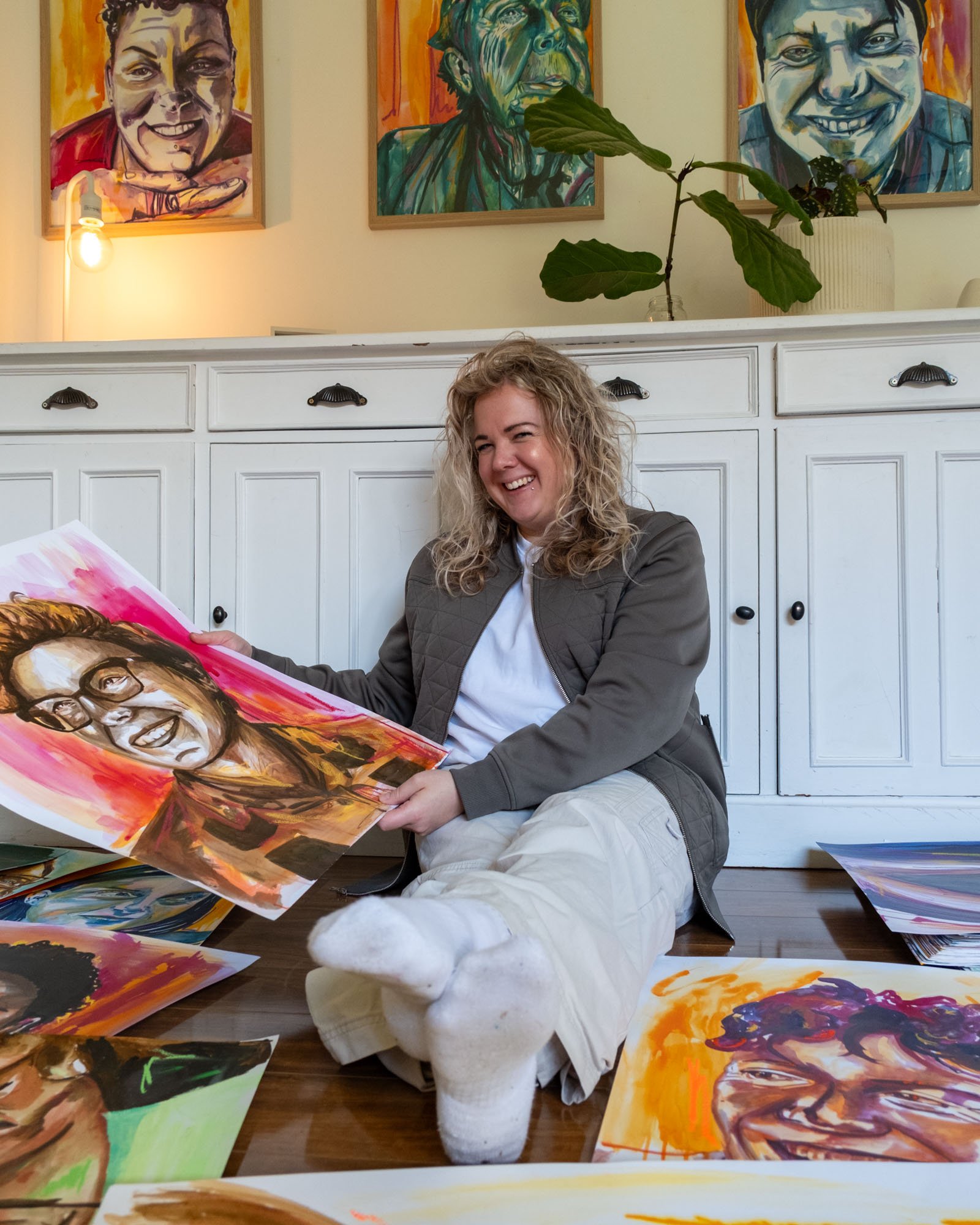
The motivation behind this project is to redefine what it means to be a lesbian, challenge stereotypes, and show that each of the 100 portraits tells a story that is deeply human. These aren’t just lesbian stories — they are stories about people going through difficult, universal experiences.
They’re about dealing with emotions anyone can relate to: losing a parent, living with reduced capacity due to illness, experiencing heartache, grief, desire. All these things bring up emotions that are relatable and universal. These stories aren’t just for lesbians; they speak to human experience.

The motivation behind this project is to redefine what it means to be a lesbian, challenge stereotypes, and show that each of the 100 portraits tells a story that is deeply human.
Photography: Maya Sugiharto
When and how did it start?
I put my first post out in May 2024. I started by looking at Hollywood stories - like the one I shared with you about Radclyffe Hall, author of The Well of Loneliness (published in 1928 and later burnt on the streets in response to its lesbian content). I wanted to celebrate lesbians of our past, but they’re hard to find and not well documented.
Then I realised: even now isn’t documented. And that’s what propelled me to start. I didn’t think I was going to paint 100, but I just couldn’t stop. In fact, I had more people booked in to paint, so I don’t know when I’ll stop. There’s a demand that keeps going.
Is this a movement?
It would be lovely to call it that. I think it’s empowering because I’m documenting this community - a community I’m passionately part of - for the first time, and that feels great. Whether it’s a movement is up to everyone else and how they receive it.







Photography: Maya Sugiharto
What message are you trying to share with your audience?
I’d say everybody has a story, and everybody deserves a platform for their story. Beneath that, there is a lot of complex and messy human emotion that should be celebrated.
Stacey Bennett Website: https://staceybennett.art
