

From ’78 to Now: Kate Rowe on Lesbian Storytelling, Activism, and Aging Out Loud
Pull up a chair in our lounge - today we’re celebrating a woman whose life threads through the very fabric of Australian lesbian history. Kate Rowe, a proud 78er, activist, athlete, artist, survivor, and late‑blooming memoirist, joined Silke for a conversation that is equal parts rollicking, reflective, and radically honest. Together, they trace the arc of lesbian community from the streets of 1978 to the shifting language of today, and into the unapologetic joy of aging out loud.
The Night It All Went Down: Activism, Violence, and the Birth of Community
For anyone who thinks queer history began with last year’s Mardi Gras float, Kate Rowe offers a sharp, spirited reminder: our community was built by people who stood up and said “enough.”
She takes us straight back to June 1978 - the night that changed everything.
““It went from great to horrible,” she tells Silke. Yet in the face of police violence came something powerful: unity. “We all came together to fight the injustice... that whole political activism might have fizzled out if that night hadn’t happened. But because it did, a lot of us, including me, became politically active. We became energised.””
That energy carried through the darkest years of the AIDS crisis, when lesbians stepped up as carers and chosen family. Kate remembers marching in complete silence from Whitlam Square to Green Park: “No one could have gone from that not being touched or feeling incredibly sad. Again, it was another challenge for the community, and we grew out of that as well.”
Where Do Lesbians Fit in the “Queer Alphabet”?
Silke doesn’t shy away from the big questions: Has lesbian identity been swallowed by “queer”? Are older lesbians being erased? Is inclusion expanding us - or diluting us?
Kate Rowe meets the tension head‑on.
“Many older women feel really threatened in some ways. Lesbians have always been invisible… even within the gay and lesbian community, lesbians still somehow get shafted.”
She’s honest about her own conflicts, especially around generational language shifts and the weaponisation of terms like “terf.”
“I don’t like the word ‘terfs'; I think it’s demeaning. But I understand how some women feel; I have conflicts about it too. The difference for me is, I need to have an open mind. I need to learn about this. If there’s respect both ways, I can accept people.”
And on the rise of “queer”?
“It’s the lexicon of the day... The whole world has changed, and the lesbian community has changed. We can either hang to the past, which it won’t be, or we can just see it as part of a continuum of evolution.”
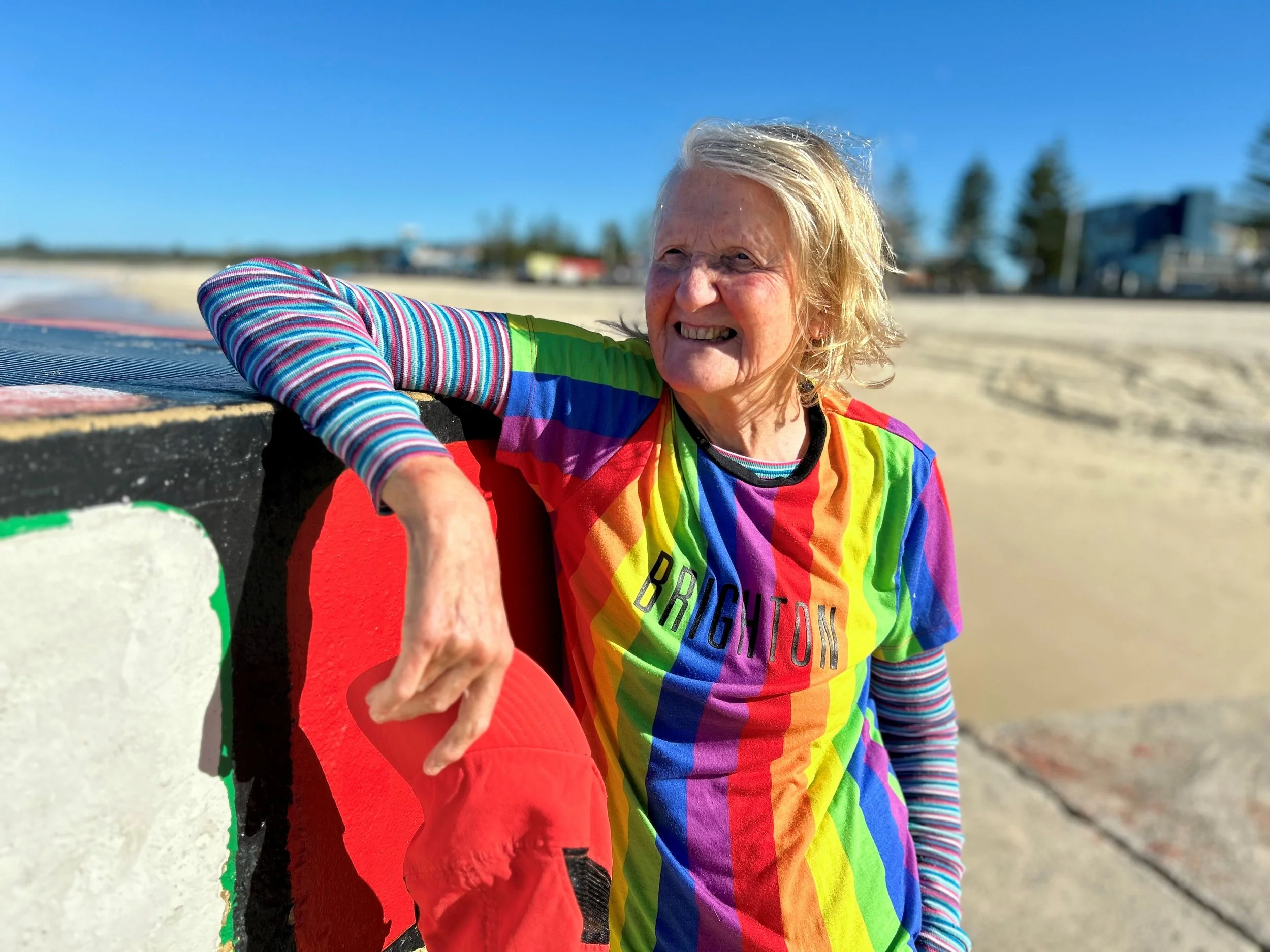
Kate Rowe
It’s a call to all generations: listen, learn, and leave space for change.
Kate Rowe, Photo supplied
Aging Out Loud - With a Ukulele in Hand
At 75, Kate Rowe is refreshingly blunt about aging in a world obsessed with youth - espe
cially within queer spaces.
“I don’t think older gay men are invisible, but older lesbians are... just as we are in the wider community, people who are getting older are invisible.”
Her antidote? Movement, connection, and storytelling.
“I navigate it by staying engaged. I don’t have to go to every protest, but I stay involved; I talk to younger women who want to know what it was like. I tell my stories.”
After retiring fro
m competitive triathlon at 69, she picked up the ukulele and found a new tribe: “There’s a whole planet of ukulele - and lots of lesbians play!”
Even after breaking her shoulder, she walks the ocean every morning. “Once I stop moving, my mind will stop. Staying fit just changes your mindset... Every day is precious because I could not wake up tomorrow.”
Late‑Blooming Storyteller: How the Fck Would I Know?*
One of the most joyful twists in Kate’s story is her late‑life leap into writing. For decades she doubted her voice, until audiences started demanding more.
“I never really saw myself as being necessarily a good writer,” she admits. But eventually she said “bugger it” and wrote her memoir: How the Fuck Would I Know?
It’s not a victim narrative. It’s not a lecture. It’s raw, funny, raunchy, reflective, and deeply human. Readers binge it in two days. Audiences cry, laugh, and hug her - grateful for stories they wish they’d heard sooner.
Kate’s next chapter includes editing her long‑hidden 1970s travel stories, dreaming of a TEDx talk, and continuing to use her own narrative to make space for others.
“I’m not the only one who was abused as a child. I’m not the only lesbian. I’m not the only 78er. If what I say gives someone else the space to look at their own story, then that is enough.”
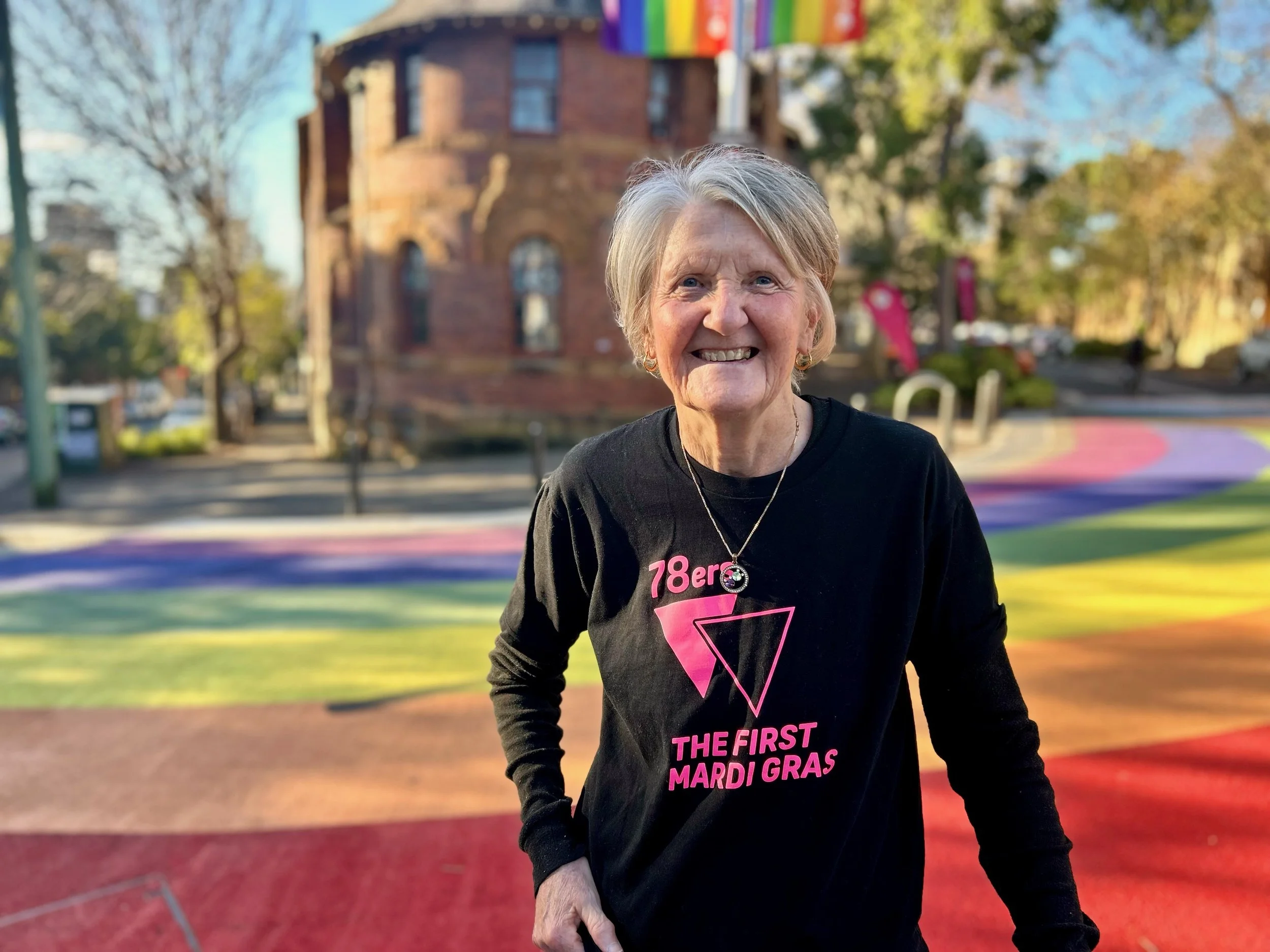
Kate Rowe, Photo supplied
The Takeaway: Honour Our Elders, Honour Our Stories
Through laughter, tough truths, and a cheeky warning - “As long as they’re not AI lesbians...”, Kate Rowe reminds us that queer community is built on both tradition and transformation. Our elders are living archives, carrying the stories that shaped our rights, our culture, and our resilience.
We owe them more than thanks. We owe them our attention.
Find more of Kate Rowe’s work, including her memoir, at katerowe.net, and keep an eye out for her next storytelling event.
And below, you’ll find the full conversation from LOTL Lounge - a long‑form episode that captures Kate’s voice exactly as it deserves to be heard.