
Messy, Queer and Unapologetically Human: Inside Laura McPhee‑Browne’s Worry Doll
Laura McPhee‑Browne’s Worry Doll is a queer novel that refuses to behave, slipping between obsession, projection and the fragile realities we build for ourselves. Through Heloise and Lacey - two women whose connection is shaped more by longing than truth - McPhee‑Browne gives lesbian and queer readers something rare: characters who are messy, complicated and fully human. Their queerness isn’t a crisis; it’s a given. What unfolds is a haunting, ambiguous story that lingers long after the final page.
“It kind of feels like a hard novel to pin down.” That’s how the launch of Laura McPhee‑Browne’s Worry Doll opened - and it’s the perfect entry point into a book defined by its ambiguity.
I was sitting in the Brunswick Artists’ Bar, listening to McPhee‑Browne in conversation with writer and critic Beth Atkinson‑Quinton. The room was packed, a testament to the reputation McPhee‑Brown has built across her literary career.
Hearing Atkinson‑Quinton describe Worry Doll came as a relief. I’d worried that my own inability to neatly summarise the novel meant I’d somehow failed it - that I’d missed something essential. But as the discussion unfolded, it became clear that this slipperiness is intentional. The novel resists being pinned down because its characters resist being understood.
“The novel resists being pinned down because its characters resist being understood”
Worry Doll follows two women, Heloise and Lacey, who meet on a train. Heloise lives with her long‑term partner Ernie, who remains oblivious to her growing distance - and her fixation on the younger woman she’s just met. Restless in her quiet domestic life, Heloise becomes consumed not by Lacey herself, but by the fantasy she projects onto her. As Atkinson‑Quinton noted, Heloise is enamoured with the idea of Lacey: someone who might fill an unnamed emptiness, a wound she cannot heal.
Reflecting on her first love, Heloise recalls being “utterly obsessed… completely lost inside this person,” sensing it was tied to trauma, abandonment, and unresolved grief. Her obsession with Lacey becomes a familiar pattern repeating itself. For both women, the connection is never truly about the other person - it’s about what they need to see reflected back.
Lacey’s perspective appears 18 months later, set in Aotearoa New Zealand. The time jump is jarring at first, but ultimately essential. It shows the long shadow Heloise’s fixation casts - stretching across days, weeks, and eventually years. Without spoiling the plot, the second half delivers several sharp turns, including a final paragraph that reframes everything that came before. McPhee‑Browne builds a dynamic we think we understand, then pulls the rug out from under us.
Through Heloise and Lacey’s conflicting recollections, McPhee‑Browne asks whether an objective truth - or a shared reality - is ever possible. When every moment is filtered through our own desires, fears, and histories, can we ever truly know another person?
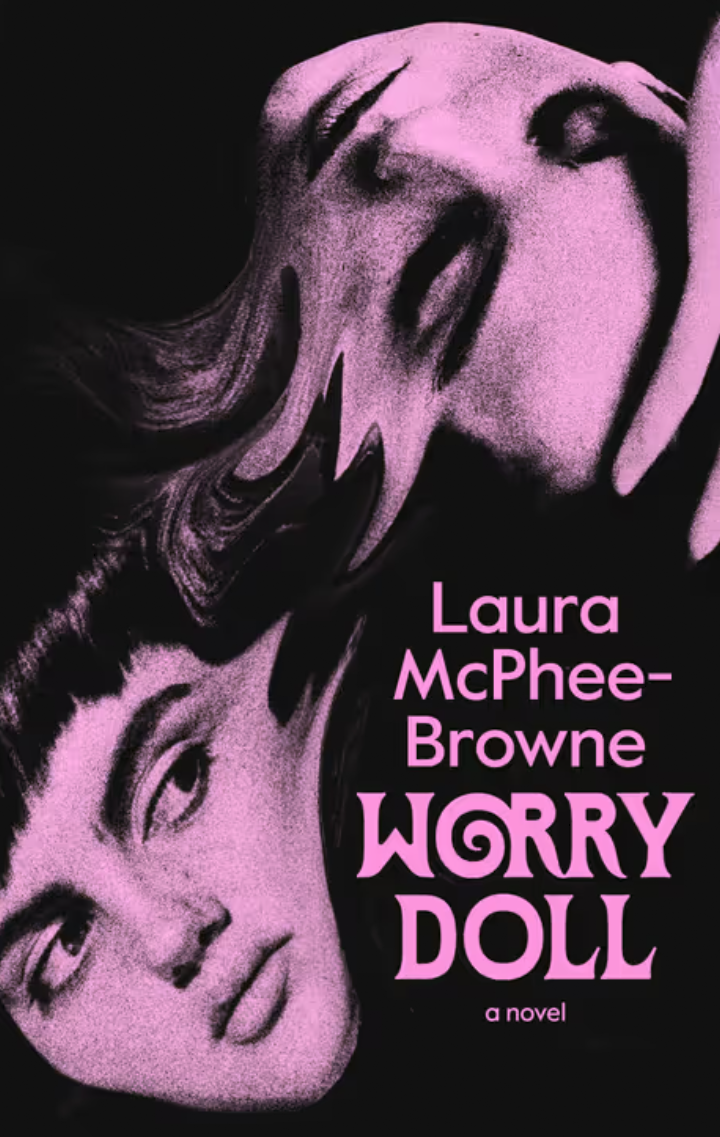
WORRY DOLL
For Heloise and Lacey, desire becomes a mirror - reflecting need rather than truth
For Heloise and Lacey, the answer is a clear no. When asked about the ending, McPhee‑Browne reinforced this ambiguity, telling the audience: “I don’t have an opinion on what actually happened.”
As a queer reader, I found it refreshing to see queer women portrayed as complex, flawed, fully realised people - their queerness simply part of who they are, not a source of shame or conflict. The novel focuses instead on their choices, their patterns, and their emotional landscapes. It’s the kind of nuanced representation queer women deserve, and have too often been denied.
Reading Worry Doll means sitting with a persistent sense of unease - one that lingered long after I closed the book. Its narrators are messy, human, and painfully real. They remind us that we construct our own reality, and that we can just as easily dismantle it.