Extended Interview:
Nikki Ayers OAM PLY: “Still finding out what I can do”
This page features the full interview with Nikki and Karen, as heard in LOTL Lounge Season 8, Episode 5
Listen to the complete conversation below or continue reading the expanded written feature.
A Story Worn on the Body
Words and Photos by Karen Bryant
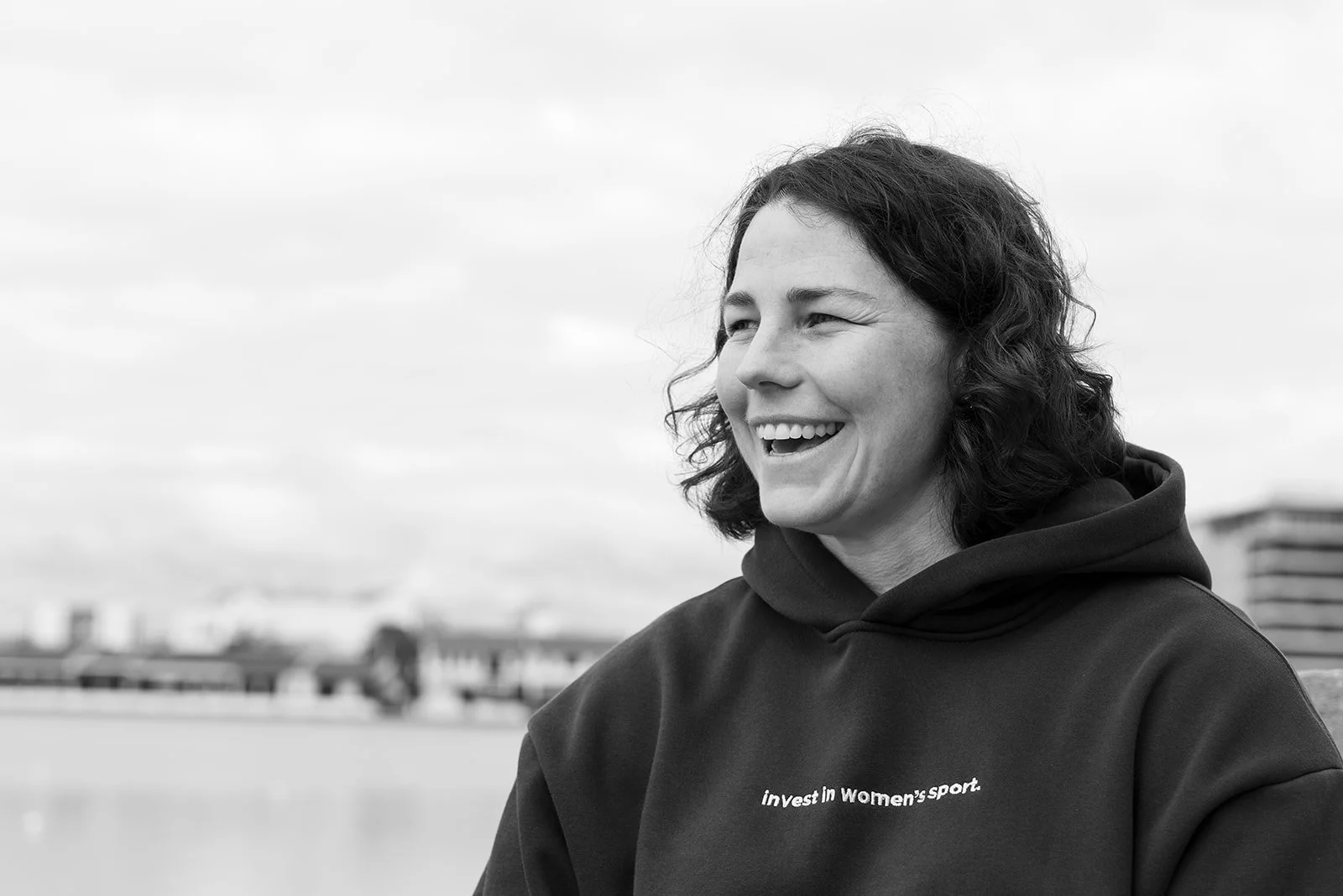
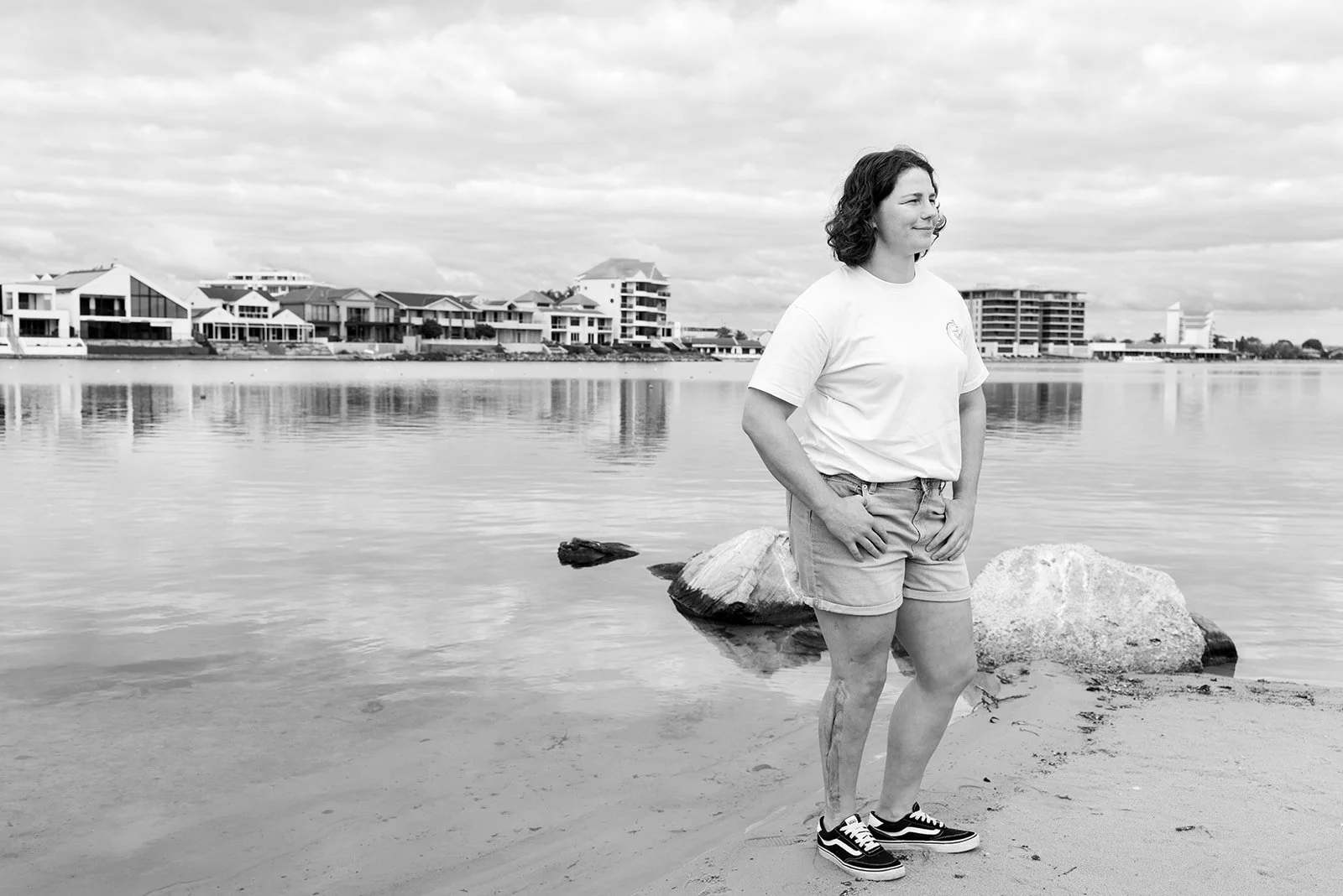
Some people arrive in front of an interviewer already braced, holding themselves a little apart. Nikki Ayers is not one of them. Sitting down together in Adelaide, Nikki seemed like someone who has made peace with being seen. A scar runs the length of her leg, a whole geography of surgery and survival, and she no longer covers it. That, I would come to understand, is the whole story in miniature.
Photo Nikki Ayres, Credits: Karen Bryant, 2026
Belonging, Plans and the Thread That Holds It All Together
Nikki is a Paralympic gold medalist, a nurse and midwife, and a proud gay woman from a small town in New South Wales. She is also, by her own cheerful admission, a person with a plan, a plan for her plan, and a backup plan after that. But the thread that runs through all of it is not really about medals or logistics. It is about belonging and making sure the next kid who feels different finds their people sooner than she did.
The Tackle That Changed Everything
When Nikki spoke about the tackle that changed everything for her, the memory was still physical. She remembered the wind, the impact, the way her body responded before her mind could catch up, the way she knew instantly that something was very wrong. “I just remember… I could see my knee facing one way and my foot facing the other.” For Nikki, this is not a story she tells from a distance. It is something she still carries in her body, in the way she understands who she is now.
Growing Up in Rugby Country
Before that moment, Nikki was a rugby player. That was the centre of everything for her. Growing up on the south coast of New South Wales in a rugby league family, sport wasn’t just something you did. Nikki played Rugby League with the boys as a kid, the only girl on the team until her early teens, when there was no longer a pathway for her. Then she found rugby union, building a life around the possibility of representing Australia in that sport. And for Nikki, who hadn’t previously found anywhere she could be herself as a young queer woman, “It was the first place I ever truly felt like I belonged.”
There she felt her identity was clear. Anchored. Certain. Until it wasn’t.
Catastrophe and the Long Road Back
The injury in Canberra in 2016 was catastrophic. Nikki dislocated her knee, tore three ligaments, severed the main artery and a nerve, and developed compartment syndrome. As a nurse, she understood exactly what she was looking at as she lay on the ground.
“I remember asking the surgeon, ' Am I going to lose my leg? And he said, ‘yes’.” “ “ Sixteen surgeries over nine months followed. Her identity, so tightly woven around sport, seemed to unravel in a hospital bed. “The hardest thing as an athlete is when it is not your decision,” she said. And yet, even then, she was choosing. Within a fortnight of leaving hospital, she was back in the gym on crutches, telling astonished onlookers that she still had two good arms and one good leg.
Finding Rowing Almost by Accident
That refusal to look at what she could not do, and her insistence on finding what she could, carried her somewhere she never expected. Introduced to Paralympic sport at a talent day, she found her way to rowing almost by accident. “I just needed something to focus on.”
It turned out she was rather good at it. Within a year, she was representing Australia. Training up to 30 hours a week, balancing elite sport with night-shift work as an ICU nurse, Nikki built a life defined by discipline and sacrifice.
Tokyo, Paris and Making History
Within five years, she was a Paralympian. Tokyo came in 2021, a fourth place that felt like the impossible made real. Then Paris in 2024, where she and Jed Altschwager OAM PLY raced in the PR3 mixed double. They won gold, Australia’s first Paralympic rowing gold medalists. They set a Paralympic record along the way.
But this isn’t really just a story about medal-winning success. It’s about feeling supported to find and be oneself, about burnout, about rebuilding. About choosing to begin again. And about helping build pathways that others who follow can tread more easily.
Reframing the Body
“I can honestly say my injury is one of the best things that happened to me.” Because of who it allowed her to become. She learned, from Jed, that she could not change her leg, but she could change how she thought about it. She looks at photographs from before the injury now and does not recognise that leg as hers.
Visibility: The Word She Keeps Returning To
Visibility is the word Nikki keeps coming back to throughout our chat, because she knows the cost of its absence. Growing up, she had no female sporting role models, let alone queer ones. She watched a boy at her school get bullied so badly for being perceived as gay that the lesson landed hard: push it down, hide it, do not be that kid. It was rugby that finally showed her something different, and the community around the game that let her work out who she was without judgement. “I don’t know what would have happened,” she said, “if I didn’t have that rugby community that let me be me.”
Rowing’s Elitism and the Fight for Safe Spaces
Elite sport did not always feel so safe. Rowing, she found, could be an insular and elitist world, and for a long time she did not feel able to be open within it. That experience is exactly what fuels her now. She talks about the small things that change everything: a pronoun added to an email signature, someone standing on a podium and quietly proving that you can be all of who you are and still belong there. “I’m here, I’m queer, I’m still a human,” she said, and laughed, but she meant every word.
Pride Socks and a Quiet Rebellion
At a regatta in northern Italy, the year before Paris, Nikki and Jed raced in pride socks, broke the world record twice and won their first World Cup. As they waited to receive their medals, an official told them to take the socks off, calling them a political statement. Nikki rolled hers down, collected her medal, and the instant she stepped off the dais she pulled them straight back up for the photographs. “This is so much bigger than this,” she remembered thinking. A pair of socks is only political to someone who would prefer you were invisible.
Stopping, Breathing, Beginning Again
After her Paralympic success, Nikki did something brave in a different key. She stopped. “I didn’t realise how burnt out I was.” Stepping away from rowing created space. “I didn’t have to do anything. I could just do what I wanted.” She fitted a rooftop tent to her car and travelled Australia, finding freedom again. She swam with whale sharks off Ningaloo, floating in the open ocean beside a creature that answers to no one. Throughout her travels, she spoke in schools because she loves the questions children ask before the world teaches them to stop asking.
The Work of Visibility
Now, visibility matters more than ever to Nikki. “I grew up without role models.” She has deliberately turned that absence into work she has given herself. For her, change does not always begin with grand gestures. The language used, a policy that tells an athlete they are welcome, or simply seeing somebody like yourself standing where you once imagined you could never be. She is chasing public speaking wherever she can find a foothold, not because it comes easily, but because she has decided her gold medal is worth far more as a platform than as an ornament. “I’m more than happy to be a voice for other people who aren’t ready to voice it themselves,” she told me.
Creating Safer Sporting Environments
Through Australian Institute of Sport (AIS) pride programs, she came to understand that visibility can itself be a form of permission, while also recognising that sporting organisations must do the harder work of creating environments where queer athletes can compete openly. Too often, she says, it comes down to the dollars, money spent elsewhere while the policies and safe spaces that would let an athlete compete as their whole self go unwritten. She is clear about what that costs. Athletes stay closeted and performances quietly dimmed, because someone never felt safe enough to be themselves.
Holding the Door Open
That conviction reaches across both identities she carries. The para community took Nikki in without question when she was still learning to see herself as a person with disability. She is determined that the next person, queer or disabled or both, will not have to search as hard as she did to find someone who looks like them at the top of a sport. In a school in Exmouth, a young girl cradled Nikki’s gold medal and announced she was going to swim at the Olympics. “You go for it,” Nikki told her. “Don’t you ever give up on that dream. This is the medal you could win.” Nikki will never know what that child carried out of the room. Perhaps that is the point. Every time she stands visibly as her full self, somebody watching gets to think, that could be me.
What Comes Next
These days she is training again, this time in wheelchair basketball and hand cycling, with the Los Angeles Paralympics 2028 somewhere on the horizon. When I interviewed and photographed Nikki, I was expecting to capture an athlete at the finish of something profound. Instead, I found a proud lesbian woman mid‑journey, scarred and unhidden, funny and fierce, still deciding what she is capable of and holding the door open behind her.
Photo Nikki Ayres, Credits: Karen Bryant, 2026
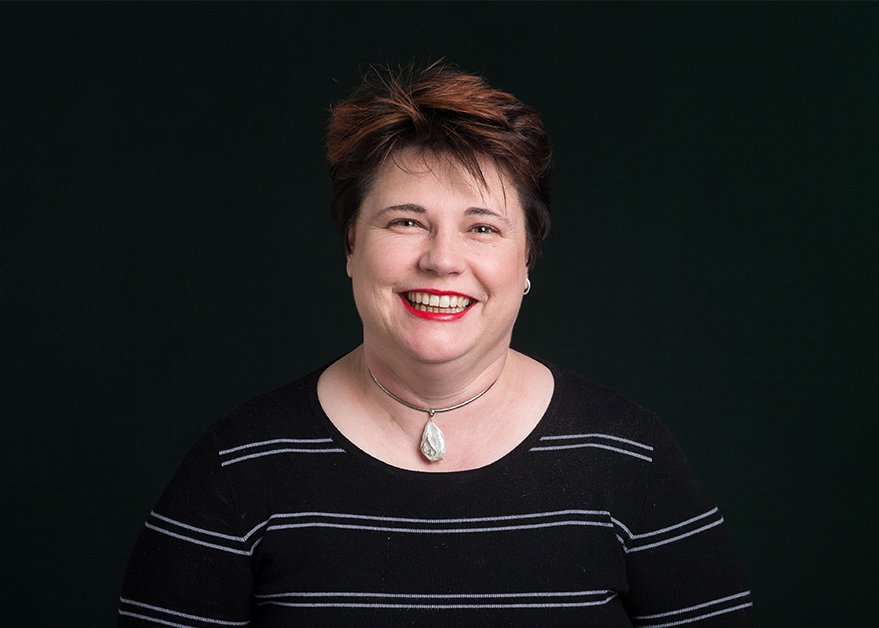
Karen Bryant is a writer, storyteller, photographer and Creative Director whose work explores identity, courage and the human stories that connect us. Drawing on more than 30 years in the arts and LGBTQIA+ cultural leadership, she creates intimate portraits in words and images, with a particular commitment to amplifying queer voices and lived experiences. She is the founder of Capturing Courage Photography / Storytelling and is also currently the Chief Executive and Creative Director of Midsumma Festival in Melbourne.
Listen Up
Prefer to listen to the Podcast? Listen to the LOTL Lounge