
Extended Interview:
Avi - Cold Water, Clear Truths
This page features the full, extended interview with Avi, as heard in LOTL Lounge Season 1, Episode 2.
Listen to the complete conversation below or continue reading the expanded written feature.
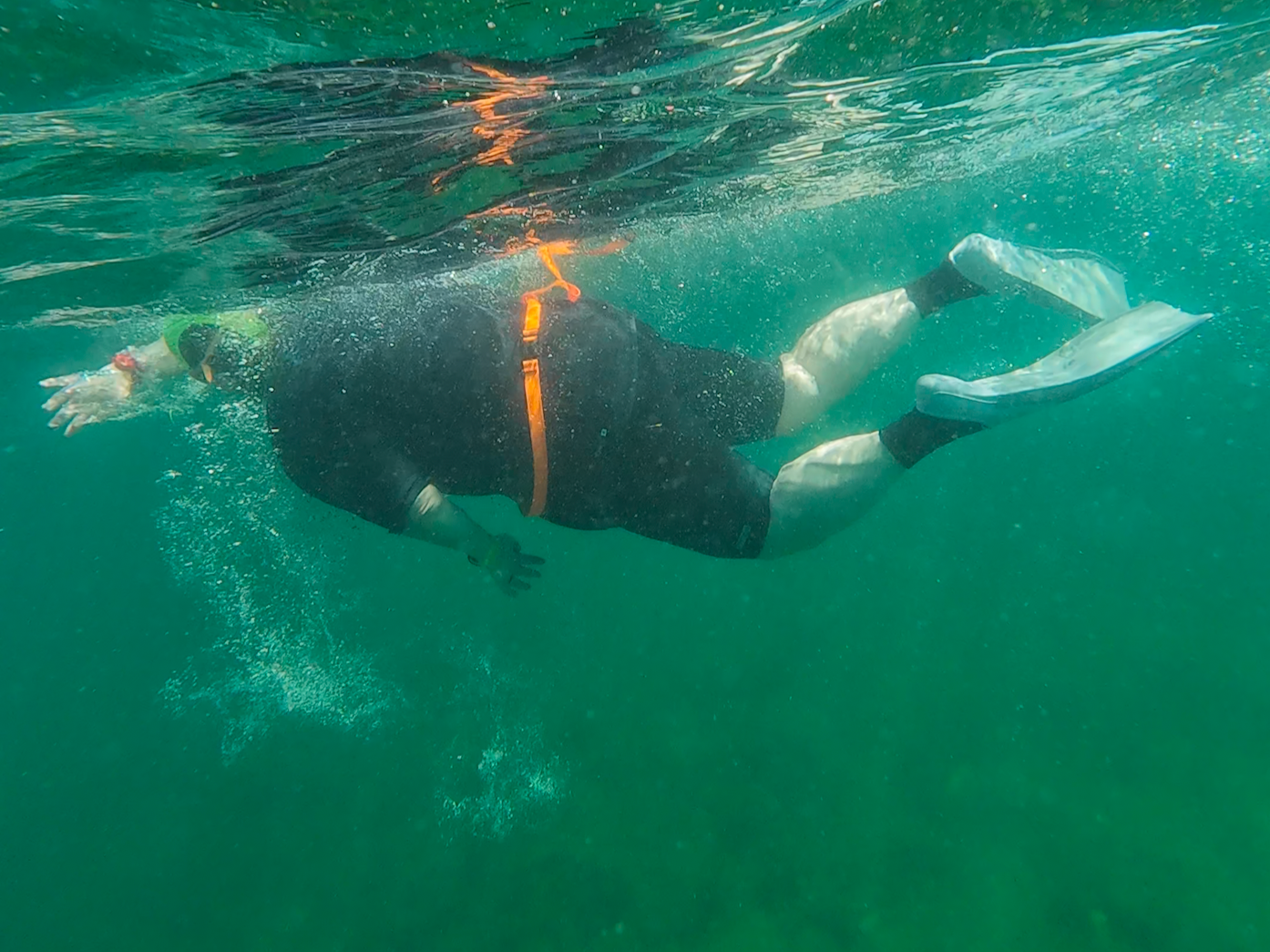
Avi Wreck 2 Reef Competition - © Copyright 2026 Aviva Minc
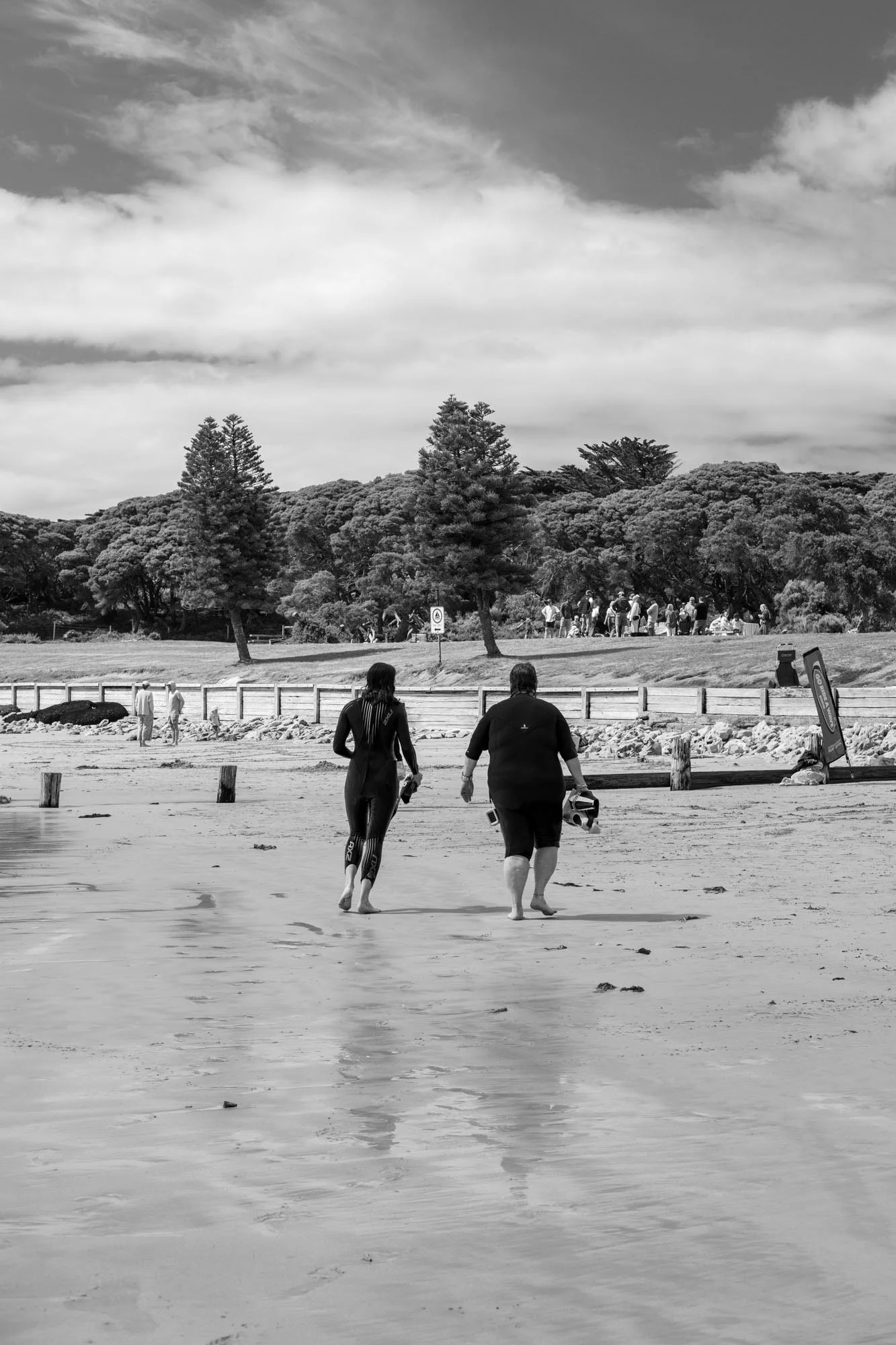
Avi Swimming Torquay -
© Copyright 2026 Maya Sugiharto
Cold Water, Clear Truths: How One Swimmer Found Healing in the Icy Surf Coast
Learning the Ocean’s Temperament
Cold ocean swimming is not gentle. It demands presence, awareness, and a willingness to surrender control. Avi describes the water as a teacher - one that forces her to listen to her body, regulate her breath, and stay grounded in the moment.
The waves terrified her at first. Deep water, reefs, stingrays, the unknown. But she kept showing up. Two women held her hands and taught her how to read the waves, how to move with them rather than against them. Over time, she pushed further - first dipping, then swimming to the buoy, then completing 1.5‑kilometre swims in water as cold as 10 degrees.
“My body used to freeze and disassociate. Now it remembers how to survive.”
Cold water triggers the body’s fight‑or‑flight response. For Avi, a survivor of childhood sexual abuse, that response was once tied to trauma. But the ocean helped her rewrite that pattern. The cold taught her to breathe through discomfort, to stay present, to trust her body again.
Cold ocean swimming isn’t just a trend - it’s a lifeline, a ritual, and for some, a reclamation of self.
In this week’s LOTL Lounge conversation, Avi, a 54‑year‑old lesbian, cold‑water swimmer and survivor, shared a story that is as raw as it is restorative.
Her journey into the icy waters of Victoria’s surf coast is not simply about endurance; it’s about returning to a place where her body, mind and identity finally feel like home.
Finding Home in the Cold: Avi’s Story of Healing, Identity & Ocean Ritual
For many of us, the ocean is a place of escape - a holiday postcard, a summer memory, a horizon that promises something bigger than our daily lives. For Avi, the ocean is all of that and more. It is the place where she learned to breathe again.
Avi grew up loving water. Pools, sprinklers, fishing trips, holidays in Merimbula - anything that involved being submerged made her feel safe. But a traumatic encounter with bluebottles as a teenager, combined with lifelong body‑image struggles, kept her out of the ocean for decades. It wasn’t until 2023, after moving from Melbourne and facing one of the darkest periods of her life, that she found her way back.
“In the water, I feel like I’m me again.”
That sentence, spoken quietly but with conviction, sits at the heart of Avi’s story.
A Chance Encounter, A New Beginning
After relocating to Victoria’s surf coast, Avi was struggling with the weight of her complex PTSD from her childhood trauma of sexual abuse, which made the move and everyday life feel impossible. One day, she decided to go for a swim at the local pool. That simple act changed everything.
Within minutes, a stranger mentioned a cold‑water swimming group. The name The Salty Bitches was unforgettable, but the location was too far. So Avi searched for something closer and found a group in Torquay.
On a cold April morning, she walked toward a crowd of strangers in her bathers, heart pounding, and stepped into the ocean for the first time in decades. Until this point, putting just her toes in a little would terrify her.
That moment became the beginning of a ritual that would save her life.

“My body used to freeze and disassociate. Now it remembers how to survive.”
Avi Swimming Torquay - © Copyright 2026 Aviva Minc
The Science Behind the Healing
Avi’s experience is deeply personal, but it’s also backed by research. Cold‑water immersion can:
increase dopamine by up to 250%
release endorphins (natural painkillers)
reduce inflammation
improve mental clarity and alertness
regulate stress hormones
For Avi, these physiological shifts were life‑changing. The ocean became her anchor, something as essential as food, sleep, or air.
Reclaiming Identity Through Movement
Cold ocean swimming didn’t just heal Avi’s mental health; it reshaped her sense of identity.
Reclaiming Identity Through Movement
Cold ocean swimming didn’t just heal Avi’s mental health; it reshaped her sense of identity.
As a queer woman in a larger body, who has been bullied severely for how she looked and who has lived with body-image issues her entire life, stepping into the ocean in a bathing suit or super tight body-hugging wetsuit felt radical. People stared. They still do. She noticed. But she kept going
Her body, once a source of shame, became a source of strength.
It carried her through rough waves, strong currents, long swims, winter competitions, and even boogie‑boarding sessions with her wife. It became proof of her resilience.
“My body is fit. It carries me. It gets me there and back.”
This shift - from self‑criticism to self‑recognition - is one many queer women will understand. The ocean didn’t just give Avi a hobby; it gave her a new relationship with herself.
Vulnerability as Strength
Avi is an open book. She cries easily, feels deeply, and speaks honestly about her pain. For years, that vulnerability made her feel exposed and alone. But now, she sees it differently.
Her openness has become a bridge - one that allows others to step forward with their own stories. Friends tell her they feel safe around her. Strangers connect with her authenticity. Her wife reminds her that despite everything she’s endured, she still leads with love.
Avi’s vulnerability is not a weakness. It is her superpower.
A Message for Other Queer Women
When asked what she would say to queer women navigating trauma, identity, or mental health struggles, Avi didn’t hesitate.
She wants her pain to help others.
She wants queer women to know they are valued, that their lives matter, that even in the darkest moments, connection is possible.
She encourages risk‑taking - not reckless risk, but the kind that nudges you toward something that feels true.
And yes, she encourages jumping into the ocean.
Cold‑water swimming groups exist across Australia, and many are queer‑inclusive. The ocean doesn’t judge. It doesn’t care about your body, your past, or your fears. It simply asks you to show up.
A Ritual of Return
Avi swims several times a week. She screams underwater when she needs to. She cries. She laughs. She plays. She brings her inner child with her. She lets the waves hold what she can’t.
The ocean is her ritual, her medicine, her reminder that she is still here.
In Australia, you can contact Lifeline on 13 11 14 or 1800‑RESPECT on 1800 737 732.
And for anyone reading her story, it’s a reminder that healing doesn’t always happen in therapy rooms or quiet conversations. Sometimes, it happens in three‑metre‑deep water, under a grey sky, with stingrays nearby and strangers cheering you on.
If today’s story brought up anything difficult for you, please reach out for support.
Listen Up
Prefer to listen to the Podcast? Listen to the LOTL Lounge S1E2