Interview with Bestselling Lesbian Novelist Clare Lydon
This page features an archived interview from 2020, included as a temporary example while we prepare new Reading Episodes. Fresh author readings and interviews will be added throughout the next month.
Clare Lydon is a bestselling lesbian romance author whose warm, witty and emotionally rich novels have made her one of the most beloved voices in queer fiction today. Known for her sharp dialogue, relatable characters and unapologetically joyful storytelling, Clare has published multiple chart‑topping books that have resonated with readers around the world.
Her work often explores love, identity, friendship and the everyday lives of queer women, offering stories that are both deeply human and refreshingly hopeful. Clare is also a podcaster, interviewer and advocate for LGBTQ+ representation in publishing, regularly championing queer authors and independent storytelling.
Based in the UK, she continues to write full‑time and connect with readers globally through her books, events and online community.
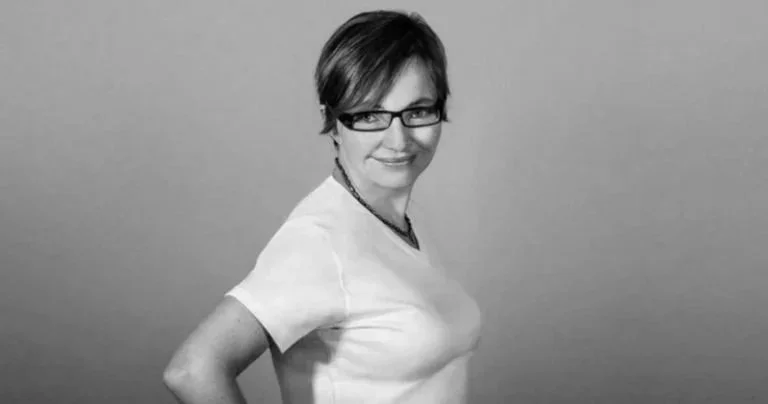
The bestselling lesbian romance novelist gives her advice to would-be writers.
Clare Lydon has won legions of fans with her funny, true-to-life lesbian romance novels, including the brilliant Nothing To Lose and the extremely popular All I Want series.
We caught up with Clare to find out just what it takes to become a professional lesfic author.
Did you always want to be an author?
I always had a book on the go, but everyone said getting a book published is very difficult. And it used to be. But now, with the advent of independent publishing, the gatekeepers are gone.
So how did you get into it?
I was a journalist for 14 years. Then I was made redundant. I thought, do I go back to trying to get another job at a magazine or online, or should I see what I can make of these novels? I was told that I was going to be made redundant in November, and they didn’t make me redundant until April. My boss got made redundant over Christmas, so I said to her, “What do I do for those four months?” And she said, “You can do what you like; I’m not here.” I actually finished London Calling while I was being paid at my job.
Wow – you were a paid novelist with your first novel!
I’d never even thought about that! Then they gave me gardening leave, so I wrote another book. My mate’s got a really nice house in Spain with a pool so I lived the writing dream. I got made redundant, had a month in Spain and started my next novel there. I finished that first draft in three months.
Did you approach traditional publishers?
The traditional lesbian publishers are all in the US, so I sent it off to Bold Strokes, and they said they could take three months to get back to me. In the meantime, I went to L Festive, and I met Kiki Archer, Clare Ashton and Angela Peach. They’re all independent publishers. They were saying you get more control, and you get more money, so it all sounded quite positive for a control freak like me. And then I got a rejection letter from Bold Strokes on Christmas Day.
Oh my god, that’s so rude! Who even sends an email on Christmas Day unless it’s to your brother in Australia??
I know! I couldn’t believe that somebody had taken the trouble to email me on Christmas Day. So then I thought, “I’m just going to publish this.” No one was more surprised than me when it started to sell.
How did you manage to sell so well so quickly?
Kiki Archer and a couple of the other authors put it out on their social media, and they were really helpful, giving me advice and answering my questions. With my journalism background, I did some press releases and got in contact with some websites. It just took off. Without independent publishing, it wouldn’t have been possible.
What are the main differences between independent and traditional publishing?
With independent publishing, you can choose your cover and your title. And the big thing is royalties. If you go traditional publishing, you’ll get about 15% of the cover price, and if you go independently published, you’ll get 70%. I’m making a living out of this now. It’s my full-time job. I don’t think I would be able to do that if I’d gone via the traditional route. I’m, in retrospect, happy that Bold Strokes rejected me, if not on Christmas Day.
Well, it seems like it’s all worked out fabulously. Why did you decide to write lesbian romance novels in particular?
It was what I read. They were mainly based in America, and I thought I’d like to read something set in London. I wanted to see a story that reflected my life. Not to say that I didn’t enjoy all the US novels that I read, but a lot of them seemed to be based on ranches with cowgirls – not something that I could necessarily connect with. Even though I enjoy a good love story, I do harbour dreams of wearing a Stetson and some cowboy boots.
You’ve written a lot of novels in a short space of time. What’s your secret?
Everyone says that. When you see your friends or family, you can see their faces go, “Oh no, it’s Clare!” and then they go, “I’ve got to tell you I haven’t read your latest book. You’re writing too quickly!” Since I’ve gone full-time, I’ve really gone full throttle. But really, you only need to aim for 2000 words a day, five days a week, and you’ve got the first draft within six weeks.
Do you ever hear from readers whose lives your books have touched?
Yes. It’s always very humbling when somebody contacts you and tells you that their book’s made a difference in their life. I remember the first time I picked up a lesbian romance novel. It was when I was travelling. I was in a hostel in New Zealand. There was a free library, and there was a lesbian romance book in there in the cabinet. My mind was blown! It is amazing when you see your life and your love reflected back in the pages of a novel.
What advice would you give to aspiring authors?
If you really want to publish your novel. There’s so much help on websites, blogs and videos that will guide you through the process. I’d say, just go for it. And read what you want to write. If you want to write lesbian romance, read what’s popular now and see what you think they’re doing right.